
M Quamer Nasim
Senior Research Fellow (Ph.D.), IIT Kharagpur
Data Scientist, NextGen Invent
I develop AI-first geoscience and Earth Science tools that convert complex subsurface data—like seismic, borehole images, and well logs—into accurate, scalable, and basin-independent geological insights. My research blends Machine Learning, Deep Learning, Computer Vision, Large Language Models (LLMs), Agentic AI, geology, and geophysics to automate seismic facies analysis, raster log digitization, lithology classification, petrophysical parameter estimation, boundary detection, well correlation, bed and fracture detection, vug analysis, and automated integrated intelligent reservoir interpretation—pushing toward the vision of an autonomous geophysical AI agent.
Data Integration
Combining seismic, wireline log, and borehole image log data.
Predictive Modeling
Building models to de-risk exploration and guide decisions.
My Journey
From Earth Science to Artificial Intelligence
My academic journey began with a Bachelor's degree in Geology from the Department of Geology, Aligarh Muslim University, India. I then pursued a Master's degree in Geophysics at the Department of Geology and Geophysics, IIT Kharagpur, where I am currently continuing my research as a Ph.D. candidate.
During my time at IIT Kharagpur, I built a strong foundation in Earth sciences, particularly in geological and geophysical data interpretation. This foundation gradually sparked an interest in exploring how computational methods, especially artificial intelligence, could be used to enhance geoscientific understanding.
My current research focuses on integrating deep learning techniques with traditional geoscientific workflows. I develop AI models that interpret borehole images, seismic data, and well logs to generate high-resolution, predictive geological insights. The goal is to reduce uncertainty in subsurface characterization and enable more informed decision-making in resource exploration and development.
Education
A progressive academic journey from foundational Earth Sciences to the frontiers of AI-driven geoscientific research.
B.S. in Geology
Foundation in Earth Sciences with focus on geological processes and subsurface characterization.
- CGPA: 7.17/10.0
- Strong foundation in geological and geophysical data interpretation
Experience
A track record of delivering high-impact AI solutions across industry and academia, from multi-million dollar client projects to cutting-edge doctoral research.
Seismic Data Processing Intern
Industry- Designed 2D seismic survey & performed key processing steps, including noise attenuation, deconvolution, velocity analysis, and migration.
Core Capabilities
This matrix presents a structured overview of my core competencies across geoscience, artificial intelligence, and computational workflows.
Geophysical Methods
Software & Platforms
Data Science & AI
Core Competency Map
This chart provides a quantified overview of my proficiency across geophysical applications, AI/ML techniques, and software engineering tools.
Proficiency Overview
This radar chart illustrates my proficiency across core geoscientific domains and advanced AI/ML competencies, reflecting a balanced interdisciplinary skill set.
Case Studies & Business Impact
Demonstrating quantifiable value through AI-driven geoscience automation, process optimization, and predictive modeling.
Borehole Image Interpretation with Deep Learning
The Challenge
Manual interpretation of borehole image logs (FMI, CMI, ThruBit) is highly time-consuming, subjective, and difficult to scale across multiple wells.
The AI Solution
Developed an end-to-end Computer Vision pipeline using Vision Transformers to automate fracture detection, vug quantification, and structural segmentation.
Agentic AI for Reservoir Analysis
The Challenge
Geoscientific analysis requires complex synthesis of multi-modal data and tedious technical report writing, leading to bottlenecks in reservoir assessment.
The AI Solution
Engineered a specialized Agentic AI workflow powered by LLMs to autonomously handle data analysis, synthesis, and report generation.
Legacy Raster Well Log Digitization
The Challenge
Decades of valuable historical well log data are locked in scanned paper logs, requiring massive manual effort to digitize and utilize in modern models.
The AI Solution
Built a CNN-Attention hybrid model coupled with OCR to accurately read, extract, and digitize curves from legacy raster images.
Auto-regressive Vision Transformer for Well Logs
The Challenge
Traditional well log interpretation methods are computationally heavy and struggle to effectively share knowledge between related petrophysical parameters.
The AI Solution
Designed an auto-regressive vision transformer model that implicitly shares knowledge across petrophysical parameters during wireline log interpretation.
AI-Powered Stratigraphic Well Correlation
The Challenge
Well correlation is highly manual, and existing automated models often fail to transfer successfully between different geological basins.
The AI Solution
Proposed a deep learning architecture for stratigraphic boundary detection and well correlation focusing on basin independence and transferability.
Seismic Domain Adaptation
The Challenge
Machine learning models trained on one geological basin suffer massive performance drops when applied to new basins due to label scarcity and domain shift.
The AI Solution
Introduced a seismic domain adaptation framework to dynamically mitigate domain shift during seismic facies classification.
GAN-based Seismic Impedance Inversion
The Challenge
Traditional seismic impedance inversion methods struggle with limited labeled data and output low-resolution results.
The AI Solution
Improved a GAN-based closed-loop semi-supervised model utilizing seismic data, wireline logs, and SGSIM simulated data.
Tectonic Framework of the Bengal Basin
The Challenge
The structural evolution and hydrocarbon potential of the Bengal Basin lacked comprehensive regional delineation.
The AI Solution
Conducted a massive regional seismic mapping study using over 10,000+ km of 2D seismic data to model structural evolution.
Borehole Image Interpretation with Deep Learning
The Challenge
Manual interpretation of borehole image logs (FMI, CMI, ThruBit) is highly time-consuming, subjective, and difficult to scale across multiple wells.
The AI Solution
Developed an end-to-end Computer Vision pipeline using Vision Transformers to automate fracture detection, vug quantification, and structural segmentation.
Agentic AI for Reservoir Analysis
The Challenge
Geoscientific analysis requires complex synthesis of multi-modal data and tedious technical report writing, leading to bottlenecks in reservoir assessment.
The AI Solution
Engineered a specialized Agentic AI workflow powered by LLMs to autonomously handle data analysis, synthesis, and report generation.
Legacy Raster Well Log Digitization
The Challenge
Decades of valuable historical well log data are locked in scanned paper logs, requiring massive manual effort to digitize and utilize in modern models.
The AI Solution
Built a CNN-Attention hybrid model coupled with OCR to accurately read, extract, and digitize curves from legacy raster images.
Auto-regressive Vision Transformer for Well Logs
The Challenge
Traditional well log interpretation methods are computationally heavy and struggle to effectively share knowledge between related petrophysical parameters.
The AI Solution
Designed an auto-regressive vision transformer model that implicitly shares knowledge across petrophysical parameters during wireline log interpretation.
AI-Powered Stratigraphic Well Correlation
The Challenge
Well correlation is highly manual, and existing automated models often fail to transfer successfully between different geological basins.
The AI Solution
Proposed a deep learning architecture for stratigraphic boundary detection and well correlation focusing on basin independence and transferability.
Seismic Domain Adaptation
The Challenge
Machine learning models trained on one geological basin suffer massive performance drops when applied to new basins due to label scarcity and domain shift.
The AI Solution
Introduced a seismic domain adaptation framework to dynamically mitigate domain shift during seismic facies classification.
GAN-based Seismic Impedance Inversion
The Challenge
Traditional seismic impedance inversion methods struggle with limited labeled data and output low-resolution results.
The AI Solution
Improved a GAN-based closed-loop semi-supervised model utilizing seismic data, wireline logs, and SGSIM simulated data.
Tectonic Framework of the Bengal Basin
The Challenge
The structural evolution and hydrocarbon potential of the Bengal Basin lacked comprehensive regional delineation.
The AI Solution
Conducted a massive regional seismic mapping study using over 10,000+ km of 2D seismic data to model structural evolution.
Borehole Image Interpretation with Deep Learning
The Challenge
Manual interpretation of borehole image logs (FMI, CMI, ThruBit) is highly time-consuming, subjective, and difficult to scale across multiple wells.
The AI Solution
Developed an end-to-end Computer Vision pipeline using Vision Transformers to automate fracture detection, vug quantification, and structural segmentation.
Agentic AI for Reservoir Analysis
The Challenge
Geoscientific analysis requires complex synthesis of multi-modal data and tedious technical report writing, leading to bottlenecks in reservoir assessment.
The AI Solution
Engineered a specialized Agentic AI workflow powered by LLMs to autonomously handle data analysis, synthesis, and report generation.
Legacy Raster Well Log Digitization
The Challenge
Decades of valuable historical well log data are locked in scanned paper logs, requiring massive manual effort to digitize and utilize in modern models.
The AI Solution
Built a CNN-Attention hybrid model coupled with OCR to accurately read, extract, and digitize curves from legacy raster images.
Auto-regressive Vision Transformer for Well Logs
The Challenge
Traditional well log interpretation methods are computationally heavy and struggle to effectively share knowledge between related petrophysical parameters.
The AI Solution
Designed an auto-regressive vision transformer model that implicitly shares knowledge across petrophysical parameters during wireline log interpretation.
AI-Powered Stratigraphic Well Correlation
The Challenge
Well correlation is highly manual, and existing automated models often fail to transfer successfully between different geological basins.
The AI Solution
Proposed a deep learning architecture for stratigraphic boundary detection and well correlation focusing on basin independence and transferability.
Seismic Domain Adaptation
The Challenge
Machine learning models trained on one geological basin suffer massive performance drops when applied to new basins due to label scarcity and domain shift.
The AI Solution
Introduced a seismic domain adaptation framework to dynamically mitigate domain shift during seismic facies classification.
GAN-based Seismic Impedance Inversion
The Challenge
Traditional seismic impedance inversion methods struggle with limited labeled data and output low-resolution results.
The AI Solution
Improved a GAN-based closed-loop semi-supervised model utilizing seismic data, wireline logs, and SGSIM simulated data.
Tectonic Framework of the Bengal Basin
The Challenge
The structural evolution and hydrocarbon potential of the Bengal Basin lacked comprehensive regional delineation.
The AI Solution
Conducted a massive regional seismic mapping study using over 10,000+ km of 2D seismic data to model structural evolution.
Borehole Image Interpretation with Deep Learning
The Challenge
Manual interpretation of borehole image logs (FMI, CMI, ThruBit) is highly time-consuming, subjective, and difficult to scale across multiple wells.
The AI Solution
Developed an end-to-end Computer Vision pipeline using Vision Transformers to automate fracture detection, vug quantification, and structural segmentation.
Agentic AI for Reservoir Analysis
The Challenge
Geoscientific analysis requires complex synthesis of multi-modal data and tedious technical report writing, leading to bottlenecks in reservoir assessment.
The AI Solution
Engineered a specialized Agentic AI workflow powered by LLMs to autonomously handle data analysis, synthesis, and report generation.
Legacy Raster Well Log Digitization
The Challenge
Decades of valuable historical well log data are locked in scanned paper logs, requiring massive manual effort to digitize and utilize in modern models.
The AI Solution
Built a CNN-Attention hybrid model coupled with OCR to accurately read, extract, and digitize curves from legacy raster images.
Auto-regressive Vision Transformer for Well Logs
The Challenge
Traditional well log interpretation methods are computationally heavy and struggle to effectively share knowledge between related petrophysical parameters.
The AI Solution
Designed an auto-regressive vision transformer model that implicitly shares knowledge across petrophysical parameters during wireline log interpretation.
AI-Powered Stratigraphic Well Correlation
The Challenge
Well correlation is highly manual, and existing automated models often fail to transfer successfully between different geological basins.
The AI Solution
Proposed a deep learning architecture for stratigraphic boundary detection and well correlation focusing on basin independence and transferability.
Seismic Domain Adaptation
The Challenge
Machine learning models trained on one geological basin suffer massive performance drops when applied to new basins due to label scarcity and domain shift.
The AI Solution
Introduced a seismic domain adaptation framework to dynamically mitigate domain shift during seismic facies classification.
GAN-based Seismic Impedance Inversion
The Challenge
Traditional seismic impedance inversion methods struggle with limited labeled data and output low-resolution results.
The AI Solution
Improved a GAN-based closed-loop semi-supervised model utilizing seismic data, wireline logs, and SGSIM simulated data.
Tectonic Framework of the Bengal Basin
The Challenge
The structural evolution and hydrocarbon potential of the Bengal Basin lacked comprehensive regional delineation.
The AI Solution
Conducted a massive regional seismic mapping study using over 10,000+ km of 2D seismic data to model structural evolution.
Research Trajectory
This chart presents the timeline of my publication history. Hover over each data point to explore selected works from that year.
Research Publications
Advances in Vug Quantification: Leveraging Adaptive Thresholding, Gaussian Weighting, and Laplacian Contrast Analysis in Borehole Images
Nasim, M.Q., Maiti, T., Mosavat, N., Grech, P.V., Singh, T. and Nath Singha Roy, P., 2025. SPE Journal, pp.1-17
Automated Detection of Geological Features: Leveraging Deep Learning for Beddings and Fractures Identification in Image Logs
Nasim, M.Q., Maiti, T., Mosavat, N., Grech, P.V., Singh, T. and Roy, P.N.S., 2025. SPE Journal, pp.1-19
Efficient self-attention based joint optimization for lithology and petrophysical parameter estimation in the Athabasca Oil Sands
Nasim, M.Q., Roy, P.N.S. and Mitra, A., 2024. Journal of Applied Geophysics, 230, p.105532.
Conference Presentations
Automated end-to-end fracture identification, classification, localization, and parameter estimation for enabling rapid risk management and CO₂ storage optimization in CCUS applications
EGU General Assembly, March 2025, Vienna, Austria
Joint Optimization of Lithology and Petrophysical Parameters in Athabasca Oil Sands Using Self-Attention Mechanism
EGU General Assembly, March 2024, Vienna, Austria
Automated Workflow for Detecting Fractures and Bedding Planes
85th EAGE Annual Conference & Exhibition, Jun 2024, Oslo, Norway
Research Ecosystem
This is a dynamic map of my professional ecosystem. Hover over any node to explore the connections between my skills, projects, and publications.
Awards & Certifications
Recognition of academic excellence and continuous professional development.
Awards & Honors
Roland S. Travel Support
European Geosciences Union (EGU)
Travel Grant
IIT Kharagpur
PACE Travel Grant
European Association of Geoscientists & Engineers (EAGE)
Travel Grant
IIT Kharagpur
Doctoral Fellowship
IIT Kharagpur
Best Thesis Award
IIT Kharagpur
Doctoral Fellowship
IIT Kharagpur
Professional Certifications
Natural Language Processing with Classification and Vector Spaces
Coursera
Convolutional Neural Networks in TensorFlow
Coursera
Applied Plotting, Charting & Data Representation in Python
Coursera
Introduction to TensorFlow for Artificial Intelligence, Machine Learning, and Deep Learning
Coursera
Introduction to Data Science in Python
Coursera
Improving Deep Neural Networks: Hyperparameter tuning, Regularization and Optimization
Coursera
Natural Language Processing with Classification and Vector Spaces
Coursera
Convolutional Neural Networks in TensorFlow
Coursera
Applied Plotting, Charting & Data Representation in Python
Coursera
Introduction to TensorFlow for Artificial Intelligence, Machine Learning, and Deep Learning
Coursera
Introduction to Data Science in Python
Coursera
Improving Deep Neural Networks: Hyperparameter tuning, Regularization and Optimization
Coursera
Natural Language Processing with Classification and Vector Spaces
Coursera
Convolutional Neural Networks in TensorFlow
Coursera
Applied Plotting, Charting & Data Representation in Python
Coursera
Introduction to TensorFlow for Artificial Intelligence, Machine Learning, and Deep Learning
Coursera
Introduction to Data Science in Python
Coursera
Improving Deep Neural Networks: Hyperparameter tuning, Regularization and Optimization
Coursera
Natural Language Processing with Classification and Vector Spaces
Coursera
Convolutional Neural Networks in TensorFlow
Coursera
Applied Plotting, Charting & Data Representation in Python
Coursera
Introduction to TensorFlow for Artificial Intelligence, Machine Learning, and Deep Learning
Coursera
Introduction to Data Science in Python
Coursera
Improving Deep Neural Networks: Hyperparameter tuning, Regularization and Optimization
Coursera
Insights & Analysis
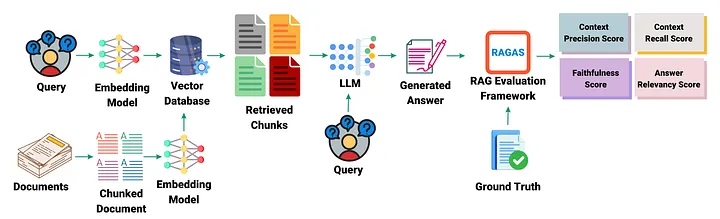
Mastering RAG: Choosing the Right Vector Embedding Model for Your RAG Application
Retrieval-Augmented Generation (RAG) applications are becoming increasingly popular as large language models (LLMs) improve. These applications combine retrieval and generation to provide accurate…
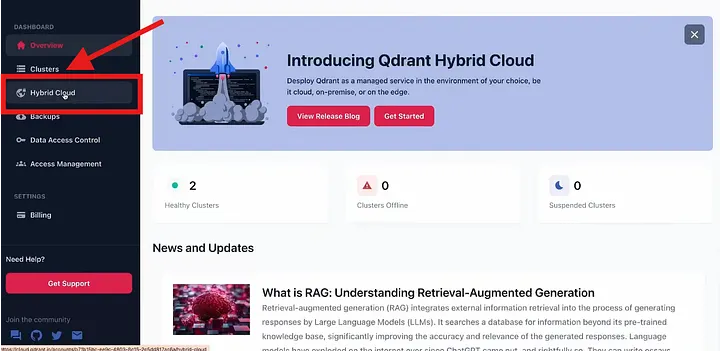
Data Sovereignty in Vector Stores: A Deep Dive into Qdrant’s Hybrid Cloud
With the rise of RAG applications in enterprises, data compliance has become a key matter of concern. Much of the data that powers enterprise RAG applications consists of sensitive information that…
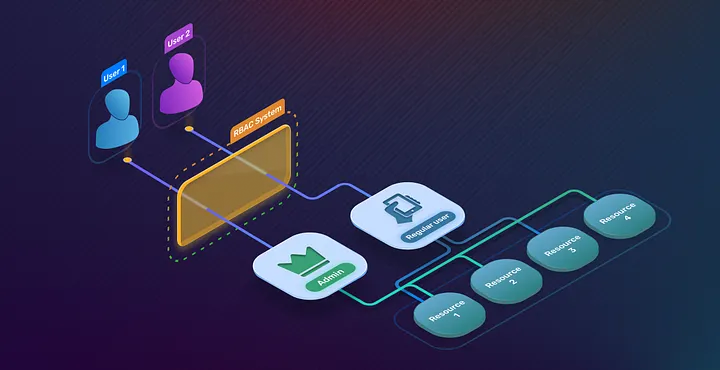
Enhancing Data Security with Role-Based Access Control of Qdrant Vector Database
Data security has emerged as major concern with the growing need for Retrieval Augmented Generation (RAG)-powered Generative AI applications in large companies. At the heart of RAG applications lies the vector database, which stores all the company’s proprietary data. This database is used by large language models (LLMs) to perform similarity searches and retrieve relevant content.

Hindi-Language AI Chatbot for Enterprises Using Qdrant, MLFlow, and LangChain
In today’s digital era, where businesses are increasingly leveraging technology to enhance customer interactions, AI-powered chatbots have emerged as a game-changer. These chatbots can have a natural conversation with users, providing real-time support and information. Though chatbots have become popular in the last two years, most of them are designed to interact in English.
Send a Message
Have a question or want to work together?
Let's Connect
I'm always seeking to engage with new challenges and innovative ideas. Whether you have a project, a question, or just want to talk science, feel free to reach out through my professional networks or directly by email.
Get in Touch Directly
quamer23nasim38@gmail.com